 Tshirt
 Custom Hoodie & Sweat
 Custom Bags
 Flag
Flag
 Towel
Towel
 Custom Scarf
 Cap
Cap

.webp)
.webp)
.webp)
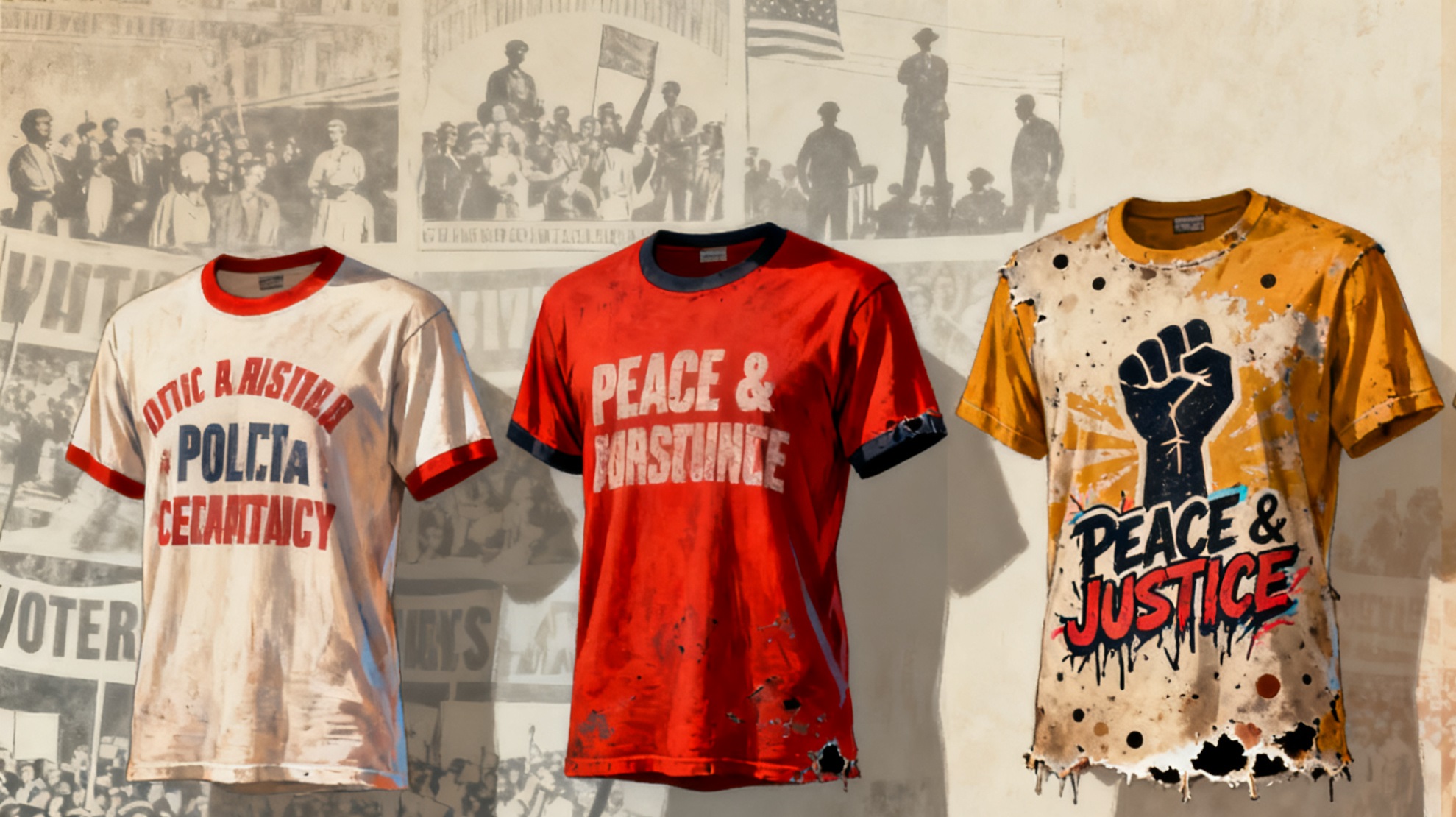
The most successful political campaign t-shirts transcend their basic function as clothing to become cultural artifacts that capture moments in political history and fundamentally reshape voter engagement. These iconic garments achieve something remarkable: they distill complex political messages into wearable symbols that supporters embrace not just as promotional items, but as expressions of identity. As an established OEM t-shirt manufacturer with extensive experience in political merchandise, Gahumi has analyzed the strategic elements that transform ordinary campaign apparel into powerful cultural symbols. This examination reveals consistent patterns in design strategy, messaging psychology, and manufacturing excellence that explain why certain campaign t-shirts achieve legendary status while others fade into obscurity.
Case Study 1: Obama "Hope" Poster T-Shirt (2008)
Visual Simplicity and Emotional Resonance
The Obama "Hope" design, originally created by Shepard Fairey and adapted for t-shirts, demonstrates the extraordinary power of visual minimalism in political messaging. The design's genius lies in its reduction of a complex political campaign to a single, emotionally charged word that encapsulated an entire national mood. The stylized portrait, rendered in a limited color palette of red, beige, and light blue, created immediate recognition while allowing the word "HOPE" to dominate visually and psychologically. This simplicity ensured the design remained effective even when reduced to small-scale printing or viewed from a distance, a crucial consideration for campaign apparel that must communicate quickly in diverse settings. The artistic style referenced both historical political propaganda and contemporary street art, bridging generational divides and appealing to both traditional and younger voters seeking change.
Important Note: The "Hope" design succeeded because it represented a feeling rather than a policy position, making it accessible to voters with different priorities who shared an emotional connection to the campaign's central theme.
Strategic Manufacturing and Distribution Excellence
The effectiveness of the "Hope" t-shirt was amplified by sophisticated manufacturing and distribution strategies that balanced quality with accessibility. The campaign ensured consistent color matching across production batches, maintaining the distinctive color palette that made the design instantly recognizable. Strategic partnerships with manufacturers capable of rapid scaling allowed the campaign to meet explosive demand following key events while maintaining print quality. The t-shirts were priced accessibly to encourage widespread adoption while still generating significant campaign revenue. Distribution was integrated with field operations, making the shirts available at events, field offices, and online, ensuring supporters could easily obtain and wear them. This operational excellence transformed a compelling design into a ubiquitous campaign symbol.
Case Study 2: Trump "Make America Great Again" Red Caps (2016)
Color Psychology and Brand Differentiation
The MAGA hat represents a masterclass in political brand differentiation through deliberate color choice and item selection. While traditional political merchandise typically featured standard t-shirts in various colors, the campaign's decision to use vibrant red baseball caps created immediate visual distinction in media coverage and at public events. The color red carried multiple associations—traditional American patriotism, Republican party affiliation, and a sense of urgency—that aligned with the campaign's messaging. The baseball cap format itself communicated accessibility and contrasted with more formal political branding, reinforcing the candidate's positioning as a political outsider. The specific red hue became so strongly associated with the campaign that it created what marketers call "color ownership," where the shade itself became a political signifier independent of logos or text.
Important Note: The MAGA campaign demonstrated that unconventional merchandise choices can become powerful branding assets when they authentically reflect a candidate's political positioning and target audience preferences.
Manufacturing Quality and Symbolic Durability
The physical qualities of the MAGA hats contributed significantly to their effectiveness as campaign symbols. The campaign selected well-constructed hats that maintained their shape and color through extensive wear, ensuring the branding remained visible and recognizable throughout the campaign cycle. The embroidery technique used for the logo conveyed permanence and quality, contrasting with the disposable feel of some political merchandise. This durability transformed the hats into long-term political statements rather than short-term promotional items, with many supporters continuing to wear them long after the election. The tangible quality of the hats supported their premium pricing, creating perceived value that enhanced their desirability while generating substantial campaign revenue.
Case Study 3: Bernie Sanders "Feel the Bern" Movement (2016, 2020)
Authentic Messaging and Movement Building
The Bernie Sanders campaign merchandise, particularly the "Feel the Bern" t-shirts, demonstrated how apparel can help build political movements rather than merely promote candidates. The designs often emphasized policy positions and political revolution themes rather than focusing exclusively on the candidate himself. This approach reinforced the campaign's messaging that it represented a grassroots movement rather than a traditional top-down political operation. The merchandise consistently used the campaign's distinctive color palette of blue and white, creating visual cohesion while avoiding traditional political red/blue divisions. The designs frequently incorporated elements that referenced political activism history, connecting the contemporary campaign to longer progressive traditions and giving supporters a sense of participating in something larger than a single election.
Grassroots Manufacturing and Distribution Innovation
The Sanders campaign merchandise strategy embraced distributed manufacturing models that aligned with its grassroots political philosophy. While maintaining quality control through approved vendor programs, the campaign enabled local supporters to produce and sell official merchandise through their own initiatives. This approach accelerated distribution while strengthening local organizational capacity. The campaign successfully integrated merchandise sales with its digital fundraising infrastructure, creating seamless supporter experiences. Manufacturing partnerships emphasized union-made and American-produced items where possible, aligning operational choices with campaign messaging about workers' rights and domestic manufacturing. This comprehensive approach to merchandise strategy demonstrated how campaign apparel could embody political values throughout the supply chain.
Common Success Patterns Across Iconic Campaign Tees
Strategic Simplicity and Immediate Comprehension
The most effective campaign t-shirts consistently demonstrate strategic simplification that enables immediate comprehension while retaining emotional resonance. This involves distilling complex political narratives into core visual and textual elements that communicate rapidly in diverse contexts. Successful designs typically feature limited color palettes that enhance memorability and facilitate consistent reproduction across manufacturing processes. The typography is carefully selected to reinforce campaign tone—whether serious, energetic, or traditional—while maintaining readability at various sizes and distances. The most iconic designs often incorporate negative space effectively, creating visual balance that draws attention to key elements. This strategic simplicity represents the culmination of extensive testing and refinement rather than merely simplistic design choices.
Emotional Connection Beyond Partisan Affiliation
Iconic campaign t-shirts typically succeed by connecting with emotions and identities that transcend traditional political boundaries. The most effective designs tap into shared aspirations, values, or concerns that resonate across demographic groups, creating opportunities for supporters to express multiple aspects of their identity through campaign apparel. Some successful designs incorporate humor or pop culture references that make political engagement feel accessible and integrated with supporters' daily lives rather than separate from them. The most enduring campaign t-shirts often express shared identities—such as regional pride, generational affiliation, or professional background—alongside political support, making them appealing to wear in various social contexts beyond explicitly political events.
Manufacturing Excellence and Quality Perception
The physical quality of campaign t-shirts significantly influences their effectiveness as marketing tools and their adoption by supporters. Successful campaigns partner with manufacturers capable of maintaining consistent color matching and print quality across production runs, ensuring the branding remains recognizable regardless of when or where a supporter obtains their shirt. The choice between printing techniques—particularly between screen printing for bold graphics and embroidery for premium items—is made strategically based on target audience and usage context. Fabric selection balances comfort, durability, and cost considerations, with successful campaigns typically offering multiple quality tiers to accommodate different supporter segments. These manufacturing decisions directly impact how frequently supporters wear campaign apparel and how long it remains in circulation as a marketing asset.
Strategic Implementation Framework
Design Development Process
The creation of effective campaign t-shirts involves a structured design process that aligns visual elements with broader campaign strategy. This begins with comprehensive audience analysis to identify visual languages and messaging approaches that resonate with target voter demographics. Design concepts are tested for immediate comprehension and emotional impact using focus groups and rapid prototyping methods. Technical considerations, including how designs will scale across different garment types and printing methods, are integrated early in the development process. The most successful campaigns establish clear design systems that maintain visual coherence across all merchandise while allowing for variation tailored to specific supporter segments. This systematic approach ensures that campaign apparel strengthens rather than dilutes overall brand identity.
Manufacturing Partnership Criteria
Selecting the right manufacturing partner is crucial for translating compelling designs into effective campaign assets. Successful campaigns prioritize manufacturers with specific political merchandise experience, as these partners understand the unique demands of election cycles, including rapid response capabilities and quality consistency across large production runs. Manufacturing flexibility proves essential for responding to unexpected campaign developments and momentum shifts that create sudden merchandise demand. Supply chain transparency and ethical production standards have become increasingly important considerations as voters scrutinize whether campaign operations align with stated values. The most effective manufacturing partnerships function as strategic collaborations rather than simple vendor relationships, with manufacturers contributing expertise to optimize designs for production and maximize campaign impact.
Integration with Broader Campaign Strategy
Iconic campaign t-shirts achieve maximum impact when fully integrated with broader campaign operations rather than treated as separate initiatives. The most successful merchandise programs align apparel distribution with field organizing efforts, using t-shirts as tools for volunteer recognition and visibility at events. Campaigns coordinate merchandise launches with key messaging moments, creating synergies that amplify both. Digital strategies incorporate merchandise to reinforce online engagement, with social media encouraging supporter sharing of how they wear and use campaign apparel in their daily lives. Fundraising integrates merchandise as both revenue generator and donor recognition, with premium items reserved for significant contributions. This comprehensive integration ensures campaign apparel strengthens multiple organizational objectives simultaneously.
Frequently Asked Questions (FAQ)
Q1: What design elements consistently appear in successful campaign t-shirts?
A1: The most effective designs typically feature limited color palettes (2-4 colors), bold typography, strategic use of negative space, and emotionally resonant messaging that transcends specific policy positions. Simplicity, scalability, and immediate comprehension are consistent hallmarks of successful political apparel design.
Q2: How important is manufacturing quality to a t-shirt's campaign effectiveness?
A2: Manufacturing quality significantly impacts both perceived campaign professionalism and how frequently supporters wear apparel. Quality issues undermine brand credibility and reduce wearable impressions. Consistent color matching, durable printing/embroidery, and comfortable fabrics are essential for maximizing campaign impact.
Q3: What percentage of campaign budgets should be allocated to merchandise?
A3: Successful campaigns typically allocate 3-8% of total budgets to merchandise, with variations based on campaign strategy. Campaigns emphasizing grassroots mobilization often invest at the higher end, while those focusing on media advertising may allocate less. Merchandise often delivers superior cost-per-impression compared to traditional advertising.
Q4: How far in advance should campaigns develop their merchandise strategy?
A4: Initial merchandise planning should begin 4-6 months before major campaigning, with core designs finalized 3-4 months before key events. This timeline allows for thorough design development, testing, manufacturing, and distribution while maintaining flexibility to respond to campaign developments.
Q5: Can campaign t-shirts effectively target specific demographic groups?
A5: Yes, sophisticated campaigns develop demographic-specific designs that resonate with particular voter segments. Variations in style, messaging, and garment types can appeal to different age groups, geographic regions, or ideological segments while maintaining overall brand coherence.
Q6: What sustainable options exist for campaigns concerned about environmental impact?
A6: Multiple sustainable approaches are available, including organic cotton, recycled materials, water-based inks, and ethical manufacturing certifications. These options align with environmental values while maintaining quality standards, though they typically involve 15-30% cost premiums that can be managed through tiered merchandise strategies.
.png)